Category: Opinion

One Door Closes……..

As almost everyone will know by now, West Ham beat Blackpool to make it back to the Premier League whilst Blackpool will have another season in the Championship.

The match itself held few surprises. Tactically it was relatively predictable with the majority of the elements cited in the preview playing out, even up to the drifting in at the back post by Ricardo Vaz Te which provide crucial at the end. In terms of analysis of the final the excellent The Seventy Two blog together a comprehensive deconstruction of events and it’s well worth a read. The key notes from the game were clearly the pressing, loose balls, Blackpool’s combination play, and the probing plays West Ham were making with long to medium distances passes to either win aerial duels or expose the space in behind Neal Eardley.

New Balance

Football is a game where balance is critical. Teams must be balanced in various ways and the job of the opposition is largely about throwing your team out of balance in whatever way possible. When games such as this are ‘in balance’ for large periods the game is generally settled by the team who converts the chances that come their way or handle the other critical moments, especially in defence. It is here where Blackpool fell just short. Matthew Phillips in particular will benefit from this experience as he’ll learn to clear his mind under pressure to execute his play with greater precision and quality. The Blackpool defence will add this to their learning as they continue their development in to a side that can defend, and perhaps this, more than the offensive side of things is where the two sides were separated.

In his second post match Sky television interview, Sam Allardyce laid his arm across the ‘inappropriate trophy’ that had just been handed over, he looked proud, tired and content all at the same time. However, it wasn’t the trophy that caught the eye, but the whiteboard in the background. Upon it alongside the names of Barry Ferguson and Stephen Dobbie were the words ‘Clean’ and ‘Sheet’. That was and always is a key priority for a man like Allardyce and even though they never achieved it, it can breed defensive discipline. Add this to the fact that the official man of the match was James Tomkins and you get a sense of where these teams have differed over the season. Tomkins has the qualities of a top defender (regardless of Blackpool’s goal), in that allied to his basic skills of heading and tackling, he has that ability at this level to not being exposed to the sort of last-ditch defending that heaps pressure upon teams. Blackpool on the other hand, has defenders who to the basics well, but perhaps don’t have the all round positional awareness at such a consistent level in order to quell teams in burgeoning moments of flight.

Hold up

In addition to this Blackpool missed the injured Gary Taylor-Fletcher as they failed to effectively engage the West Ham centre backs regularly in order to pull them apart or out of position. Kevin Phillips filled in, but despite his 16 goals this season, he appears to enjoy the latter stages of games when they breakdown giving him plenty of space to feast upon. He is superb at finding space, and his shooting is a sight to behold especially when unexpected and released early. However, the central striking role in this Blackpool set up, requires more than a traditional striker. It requires, part midfielder, wide forward and target man too. All too often when West Ham forced Blackpool to go long from back to front, Phillips failed to win  the ball. This left Blackpool’s midfield to work hard in order to mop up the loose balls that appeared as a result.

The winning goal perhaps perfectly summed up the critical differences between these two teams. Forced to go long from his goal kick Matt Gilks started the chain of events that would lead to him picking the ball out of the back of the net. Here’s the sequence of actions;

  1. Goal kick taken, aerial duel contested, West Ham won, returning the ball high and back in to the Blackpool half.
  2. Another aerial duel was contested, Blackpool won, ball returned to the half way line.
  3. Upon realising the ball was loose Jack Collinson was first to the ball and hit a first time pass to the left side in the path of Kevin Nolan who had started his run moments earlier.
  4. Ian Evatt runs over to cover, but Nolan managed to scuff a cross in to the box.
  5. The cross beats the first man, Neal Eardley.
  6. Alex Baptiste slips, falls over and the ball breaks towards Stephen Crainey and Carlton Cole.
  7. Crainey slips as Carlton Cole uses his strength to reach the ball and poke it to the unmarked Vaz Te.
  8. The rest is history.

Essentially there were four absolutely critical moments that created the final scuffle that Carlton Cole turned in to a goal. Of those four moments, two were ultimately preventable on Blackpool’s behalf and two combined in to one seamless move by a West Ham player who used his speed of thought, technique, positioning and awareness of movement ahead of him.

Eardley could have lunged and cut out the cross, Baptiste may have kept his feet and cleared, arguably Barry Ferguson could have anticipated the break of the ball that Collison seized upon. However, none of this happened, these things also happen for a reason. Yes, they brought back memories of Blackpool’s more calamitous moments in defence over the last few seasons, but as well as being a reminder of the past, it hints at what the future may have held. Blackpool’s Premier League campaign was littered with such defensive issues, and regardless of the recent defensive improvements, it’s in times of pressure where humans tend to revert to their old habits especially if the new ones are not fully ingrained.

Getting there

To see Blackpool at Wembley again was a privilege and to experience the flip side of the outcome might be an important experience for the players and supporters. There’s no shame in losing a football match, most teams lose more than they win, in fact football is probably a game of losses and how they are handled and built upon. This may seem a negative way of viewing things, but nevertheless it’s a way of viewing things. Acceptance goes hand in hand with this and whilst it is a noble approach to try to win every game, it needs to be accepted that more often than not, that won’t happen. Sides such as Stoke survive in the Premier League because they accept the games they are likely to lose and target those that they deem that winning is achievable. This isn’t to say that you give up, far from it, but sometimes you have to pick your battles. Again it’s about balance, going ‘hell for leather’ in trying to win each game can be exhausting. Knowing when to attack and when to defend is a fine art that only the best can master. There are signs that this Blackpool team are gradually getting more balance to their play. The earlier parts of the season saw the team losing their shape all too often making them weak and easy to pick off. It was common to see 6 of 7 players committed to attack leaving them exposed in transitions. Blackpool now attack with 5 or even 4 leaving more space for those players to attack and great security when a turnover occurs.

About the process

This is perhaps where Blackpool proves such a fascinating case; this side has quietly developed over the course of the season. The second half was stronger than the first and start next season in the same fashion with a smattering of further progress and automatic promotion may not be far off. It’s this prospect that perhaps offers Blackpool a better platform to jump from and in to the Premier League with a keen eye on keeping their status. The last promotion was a momentous feat, but it clearly caught the club cold and exposed their lack of structures, behaviours and strategy amongst other things. There are signs that the club has learnt from this and plans were being mapped out this time around should promotion have been gained i.e. under soil heating.

This leads to two aspects. Does the club carry out the potential (current) plans anyway? Or park them for the foreseeable with a view to revisiting them under certain conditions? Due to the way that Blackpool FC is operated, the biggest resource that the club has at its disposal is time. It’s unlikely that financial trouble will cripple the club as it has done and will do to other clubs. Therefore it’s far from unreasonable for the club to plan astutely and communicate plans effectively. The latter is critical as fans appreciation of the here and now is more keenly appreciated as they experience ‘stand still’ whilst other clubs buzz around in pursuit of glory.

Tough Nut

Obviously the Championship will have a different dynamic next season the six new teams will add their own levels of complexity. Sheffield Wednesday and Charlton will hope to follow the lead set by Norwich and Southampton in recent seasons and earn back to back promotions. Whilst Bolton, Blackburn and Wolves will bring their dishevelled states, dust themselves down and perhaps one or two of them will settle in to something good. Add this to the other good sides in the division and the Championship will be competitive as ever. Blackpool will require a few tweaks to their playing staff in the summer, but nothing too drastic. Keeping talent may be the biggest issues, but as Alan Pardew (after sending his scouts) warned on Sky after the final, Matt Phillips and Tom Ince perhaps need another season at this level. Wise words indeed and ones, if heeded, could grant Blackpool the explosive force needed to dictate games on a regular basis. In terms of recruitment, failures from January (Jamie Murphy and Michael Jacobs) may well be revisited as well as a follow-up on Ian Holloway’s stated admiration for Jacob Butterfield. However, the latter may well be in vain as Premier League teams appear to be waiting to swoop. The final pieces of the jigsaw may well come in the form of trying to secure last season’s successful loan signings such as Stephen Dobbie.

Another door opens

Whatever happens this summer, Blackpool must operate with an eye on being ready for pre-season. The last two summers have been borderline shambolic in terms of recruitment planning, albeit last season being better than the previous. This would go someway to keeping the balance and energy flowing at the club and hopefully the lessons from the Oyston money ‘scandal’ will have been learned and never faced again. For Tangerine Dreaming, the future is unclear. A summer break is needed as writing on Championship matches to the level desired is difficult due to the lack of useful metrics and the time needed to draw up meaningful articles. Expect a few close season articles in the next few weeks, read, comment and share as you wish. Thank you ever so much to everyone who has done the very same over the course of this season and since the blog started.

John

Tangerine Dreaming

Blackpool's Best Eleven

Ian Holloway hasn’t picked a consistent eleven all season. This is a light-hearted look at why that might be the case and why it’s not just a case of picking the best players.

Picking the best team from a squad of players is no easy task. If it was a simple task of listing the best players then that could lead to several complications. If that’s not the best starting point then what might be a good place to begin in a quest to find the ‘best’ starting eleven?

Natural instincts

How about understanding the way the player naturally orients himself on the field of play? This can be a very eye-opening exercise. This takes in to account their approach, mentality and where they thrive on the pitch. Obviously the final team selection takes in to many other facets such as the opponent and game objectives. The diagram below takes (entirely subjectively) a view on where each Blackpool player is naturally drawn to and excels. This gives us our starting point.

This paints an interesting picture and starts to show where Blackpool may be lacking. There are obvious points for debate based on the subjectivity at hand. For example, Ian Evatt generally lines up in the left centre back position and here he has been placed at right centre back. Arguably his one footedness doesn’t help him on the left and his more natural position should be on the right. Neal Eardley is placed much higher up the field than his right back role, mainly because he shows more of the traits of a wide midfielder than an orthodox full back. Even though they are different players both Kevin Phillips and Roman Bednar appear to enjoy the role of centre forward, not that they can’t play together, but they do like to occupy some of the same spaces. Gary Taylor-Fletcher always appears to drop in behind the striker when he starts as a forward and even when given a midfield role he drifts high up the field. Lomano LuaLua has been placed very high up the pitch; this is the area where he looks most comfortable.

Pointless

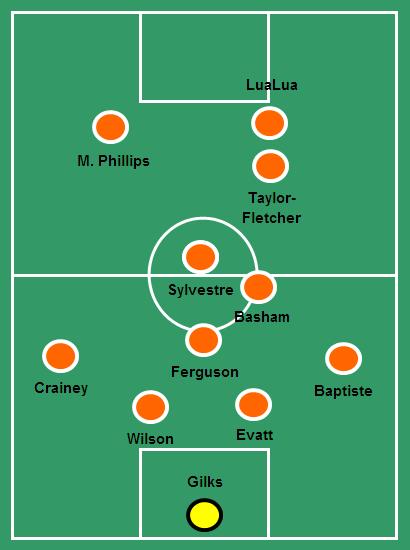
It might seem a little pointless just dropping the players on to a pitch diagram, however, that arguably gives a starting base to select the best eleven. The next logical step might be to now play fantasy football and just pick the eleven best players giving bias to the 4-3-3 scheme used by Ian Holloway. The diagram below illustrates these subjective picks.

There are reasons for going with certain players here. The centre back positions are a constant source for debate at Blackpool. The selection of Wilson and Evatt is merely a nod to the former being the best covering defender and Evatt the best positional stopper for want of better terminology. Alex Baptiste is kept at right back as he remains the best right back on the books and his positional ability is still a little questionable for the centre positions. In midfield, the trio of Barry Ferguson, Ludovic Sylvestre and Chris Basham get the nod. Basham’s technical ability gives him the edge over Keith Southern. Up front, Taylor-Fletcher as a creative force and goalscorer gets the selection alongside Matthew Phillips and LuaLua. Of course this is all entirely debatable decision-making, but it hopefully it starts to illustrate the difficult task of trying to select a best eleven.

Balancing act

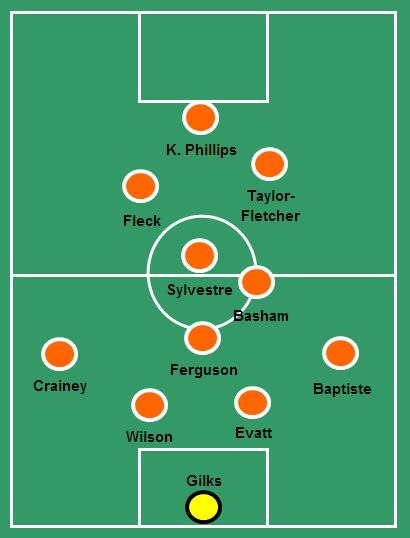
The next consideration is balance, as the diagram above shows how awkward that line up is in reality. The diagram below adds some balance between left and right, attack and defence to give another attempt at the best Blackpool eleven.

The key movers here are John Fleck and Kevin Phillips. Essentially the reasons for their inclusion now is to shift the team to the left a little more hopefully to give them better balance in their point of attack between left, right and centre. John Fleck is an interesting inclusion at this point; arguably he is the most natural left-sided attacking player. Although he has rarely played in his natural role whilst at Blackpool, where he is positioned here is potentially his optimum position. It is where he would excel with his ability to pick a pass and shoot on sight. For the sake of formation this is a kind of 4-3-3 of sorts, but woefully lacking width.

There are clear issues of balance within this Blackpool squad whilst there are excellent options with the players at hand. It does serve to illustrate why Holloway may be moving away from his trusty 4-3-3. Fielding a midfield three lacks balance due to the lack of left-sided midfielders in the squad. Sylvestre is very right footed and will always gravitate to that side. Fielding two deeper midfielders eases the selection issue for Ian Holloway but still gives his issues with finding the right blend up front with few combinations giving him width, pace and creativity as well as pure finishing ability.

Right on

This is just a very simple look at how to choose a best eleven without even weighing in the other considerable factors. Making these decisions is at the core of the manager’s role and as Ian Holloway has found the right blend in the past, there’s no reason he can’t right now. Blackpool fans everywhere will hope he has asked and answered all the pertinent questions to lead the Tangerines to a strong end of season and back to the Premier League.

Loan Report – Tom Barkhuizen

The size of Blackpool’s squad this season, combined with the lack of a reserve team and a dearth of behind closed doors friendlies, has resulted in several players going on loan in search of much-needed football. One such player is Tom Barkhuizen, possibly the most-promising youngster on the club’s books. Barkhuizen signed on loan for Hereford United towards the end of August, with his initial spell ending earlier this week.

From the outside looking in, it appears to have been a successful move for Barkhuizen, but as yet no decision seems to have been made about his next step. Hereford fan Bobo from Bulls News (@BullsNewsBlog) is keen to see Barkhuizen remain at Edgar Street for the remainder of the season, and has been kind enough to share his considered thoughts on how the young forward has been getting on away from Bloomfield Road. Over to Bobo…

The signing of Tom Barkhuizen was met with a near-universal ‘who?’ from the Bulls faithful three months ago. Now, he’s the first name on the team sheet for quite a few. Only the resident Blackpool fan on the Bulls Banter forum had heard of him, and he was full of praise. A few days later Barkhuizen had scored within a dozen minutes of his debut in the Johnstones Paint Trophy, and the word spread quickly that he could have something about him.

Bulls fans haven’t had a lot to shout about this season, especially at the time of his arrival, but he started to provide some of the bright points to our performances. A willing worker, with pace to scare the average League Two defender, he was regularly deployed wide and allowed to dart into the box whenever it took his fancy. We’ve changed our footballing philosophy since his arrival, from a passing team to a more direct John Beck-esque style since former Preston boss Gary Peters’ ‘Director of Football’ appointment, but it only seems to have allowed the teenager even more free rein to bomb into the box at will chasing down the ever-longer balls pumped forward.

He’s been used primarily as a winger, mainly on the right but has been known to switch sides during games, as we often tended to field one lump of a striker up top and rely on the wingers to come in and feed off his knock-downs. His finishing has been second to none, literally. His record of converting shots to goals beats out any of the top scorers in the division comfortably, making him our clear top scorer despite getting little more than one shot per match on average. His crossing has also been good, but he will often loft dangerous balls into spaces our strikers haven’t had time to get into yet. He probably needs to learn to let his team mates catch him up!

Is he good enough for the Championship? Probably not yet. He’s barely turned 19 and is growing in confidence in every game, but such a leap is probably too far just now. Come the end of the season, at this rate of improvement, he’ll be ready for the step up but another six months learning the game against some of the wily old pros (and the quite obvious underhand tactics to stop him) in League Two will be a much better education than the odd reserve match could manage. He’s probably capable of League One now, but we don’t really want that to happen.

We’re awaiting Ian Holloway’s answer to our request to keep him here, and every Bulls fan hopes the answer is yes.

Tangerine Dreaming – Championship Best Eleven (So far)

As the Championship season reaches it’s halfway stage, TD takes a quick look over the season so far to select a team of players that have impressed with their performances against Blackpool.

Blackpool players have been excluded and only players that TD witnessed playing against Blackpool are included. Given that TD has been close to being a part time fan in the last month or so then some good players may have missed out. Missing the home games against Watford and Birmingham may have taken away two contenders for the team. Watford’s Scott Loach and Birmingham’s Chris Burke both had strong games by all acounts. However, they don’t appear here for the reasons stated previously.

This is entirely subjective, without foundation in fact or deeper analysis, just the performance that was witnessed by TD. No players are in here due to reputation or achievement in other games. If that had been the case then TD’s favourite Championship player, Adam Lallana would have made the side comfortably. So without any further wiffle and waffle, here’s the side of the season so far.

The Best Eleven

1. Goalkeeper – David Marshall (Cardiff City)

A strong imposing ‘keeper and TD can’t add much more than that. He’s well known and is more than capable of playing at a higher level.

2. Right Back – Kieran Trippier (Burnley on loan from Manchester City)

A willing and energetic full back who will probably never make the grade at his parent club due to their ability to recruit world class players, but would be a decent acquisition for any club from the lower half of the Premier League down to the top rungs of the Championship.

3. Right Centre Back – Danny Collins (Ipswich Town on loan from Stoke City)

A basic defender, but you know what you’re getting from him. Decent pedigree and at the time of his game at Bloomfield Road, his first for Ipswich, he looked like he could bind a very weak Ipswich back line.

4. Left Centre Back – Jason Shackell (Derby County)

Similar to above, Shackell is a solid defender who does the basics well. At Bloomfield Road earlier this season he was the experience alongside the young Mark O’Brien helping to shut out Blackpool.

5. Left Back – Andrew Taylor (Cardiff City)

Not many left backs have caught the eye of TD, but Taylor looked tidy and willing to push on when space appeared in front of him.

6. Central Midfielder – Grant McCann (Peterborough United)

Sat in front of the Peterborough defence and looked very assured on the ball and disciplined off it.

7. Right Side Midfielder – Don Cowie (Cardiff City)

Excellent on the ball, can pick a pass and deliver a ball in to the box. As with his goalkeeping colleague (Marshall), really should be playing in the Premier League.

8. Left Side Midfielder – Craig Bryson (Derby County)

Energy personified and tactically disciplined. Functional rather than spectacular. He was at the heart of Derby’s game plan to stifle and frustrate Blackpool and chipped in with the winning goal too.

9. Central Striker – Rickie Lambert ( Southampton)

An excellent target man who is powerful, aggressive and strikes the ball with excellent technique as well as rising to score with powerful headers.

10. Right Forward – Marvin Emnes ( Middlesbrough)

Very lively if a little easy to read at times (let’s ball come on to him before rolling off the defender), very hard to handle when he is running either on or off the ball. Blackpool’s high defensive line was teetering on the brink of collapse on many an occasion he was involved in the attacking play.

11. Left Forward – Robbie Brady (Hull City on loan from Manchester United)

Tricky, pacey wide man. Double footed and hard to read his movement with the ball. He may well break through at his parent club should he get the chance (next season at the earliest), should he not, then he’d be in demand from a multitude of clubs. Questions currently centre on where he will spend the second half of the season.

Moving On

Some genuine quality in that side and talent that can play at a higher level and also three loan players, showing how important those players are to Championship sides. A lot is made of the gulf in class between Premier League and Championship, but it really isn’t that wide at all and there’s potentially a lot of overlap between the top Championship sides and lower Premier League side.

How many of these players will make the end of season side remains to be seen, with twenty three games to go it’s all to play for.

Competition: Win a Savile Rogue scarf

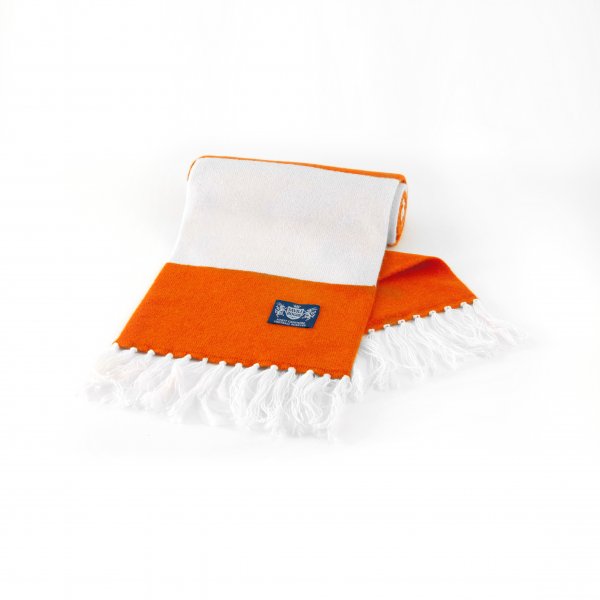
In another first for the blog, I’m delighted to announce that Up The ‘Pool has teamed up with Savile Rogue to give you the chance to win one of the world’s finest cashmere football scarves in Blackpool colours.

Savile Rogue scarves give a nod to football terraces of yesteryear, shunning in-your-face logos and cheap nylon in favour of a traditional bar design and the comfort, quality and warmth of top grade wool. It’s the sort of scarf you would be happy to wear even when you’re not at the match.
To get your hands on a Blackpool scarf, all you have to do is answer the following question:
Who scored Blackpool’s goal in regular time in the 1992 Division Four play-off final against Scunthorpe United?
To be in with a chance of winning, simply email your answer to upthepoolblog@gmail.com with Savile Rogue Competition in the subject line. The closing deadline for entries is Wednesday 14th December. The winner will be drawn at random from all of the correct entrants. Unfortunately though, entries are limited to people based in the UK.
Good luck everyone!
You can follow Savile Rogue on Twitter or Facebook.

Loan Report – Matt Phillips and Billy Clarke

In a first for this blog, I’m delighted to feature a guest post discussing the recent loan spell at Sheffield United for Matt Phillips and Billy Clarke. Ian Rands, the editor of A United View on Football, has been kind enough to share his thoughts on how Phillips and Clarke did, how they might carry this form into the Championship with Blackpool, and how the Blades will cope without the pair. I’ll now hand over to Ian…


It is rare for a loan player to come straight into a team and make a significantly positive impact. For two to achieve this was a not inconsiderable boost to a side hitting an inconsistent streak after a promising start to the season. The signings of Billy Clarke and Matty Phillips from the Seasiders were widely welcomed by Blades fans. In a side crying out for more natural width, creativity and pace, Phillips was probably the player generating most excitement. His performances in the Premier League for Blackpool stuck in the memory of many fans

The welcome for Clarke was slightly more muted, but warm all the same. His goal-scoring and potential from his Ipswich days promised much, but a low goals to game ratio in an injury ravaged spell at Bloomfield Road left fans cautiously optimistic. Writing for A United View following their move, this blog’s editor suggested that Phillips was best placed to make an impact in the Steel City derby, the first game of their loan spell. He was right and although Phillips’ impact was brief it did enough to whet the appetite for what we might have to come.

Coming off the bench on 68 minutes, with Wednesday two down, but beginning to control the match, Phillips’ first taste of the action was to pick up the ball on the right wing, just over the halfway line. Knocking it past the Owls’ cumbersome left back, Reda Johnson, Phillips set off after his own knock forward like a whippet, heading to the byline before knocking in a decent cross. Maybe this was the outlet we were looking for to relieve the pressure? Sadly he didn’t see enough of the ball after that and the Blades capitulated in the last 10 minutes to be held 2-2 – an ultimately frustrating debut.

However, it was the following Tuesday night at Deepdale when the two really made an impact. Phillips scoring two goals and Clarke having a hand in all four in a 4-2 win. I wasn’t there that night, but former Blades goal scoring legend Keith Edwards described Clarke and Chris Porter’s combination play as the best performance from a Blades front two in a long time.

Since then Phillips has gone on to score five league goals in five starts (plus one in the Johnstone’s Paint Trophy). Whilst always looking a threat from out wide, he has also found himself in more advanced positions than the strikers at times; the first of his two goals against Exeter City providing a prime example. Not as spectacular or skilful as others he has scored, but on the spot a few yards out to tap in. Having said that, it wouldn’t be difficult to find a player with greater anticipation and sharper predatory instinct than Ched Evans. Interestingly, for a wide player brought in to be the supply line we were so badly lacking, he has provided no assists to teammate’s goals. However his goal scoring has more than made up for it.

If Ian Holloway’s plan was to give Phillips game time and a confidence boost, then by God he got it. Even though there is a noticeable difference in quality between the Championship and League One, I do not see any issue with Phillips continuing his form on his return to ‘Pool. My worry would be that if he doesn’t get a chance relatively quickly, the impetus might be lost. Although Blackpool appear to be having a mixed bag of results, recent back-to-back wins might stifle his opportunities to make a similar impact to that made at United.

Clarke was an interesting player. A return of just one goal as a striker doesn’t do justice to his contribution. With a busy style, he generally played off a main striker, but often drifted deeper or wider to excellent effect. Where Clarke really added to United’s play was by being a link player, the creative spark we were missing in a workmanlike midfield and a front line lacking inventiveness. Four assists tell the story of a player with an eagerness to be on the ball and a great awareness of his teammates. 
At times the positions of Clarke and Phillips were interchangeable and you were as likely to see Clarke out wide and Phillips down the middle. This flexibility caused significant problems for League One defences. Clarke possibly lacked the consistency of Phillips and you sense fitness levels still might be an issue, but you do wonder who can play that role for the Blades when he is gone.

Although some of the recent results have been disappointing, with leads thrown away in the last few minutes of games on three consecutive weekends, that does not belie the contribution from the two Blackpool boys. In fact, with the team’s defensive frailties being regularly exposed, we have needed to score goals and you do wonder how easy they will be to come by with the two main instigators back on the North West coast. Can we have them back please? We will swap you for Stephen Quinn?!  

Tangerine Talent Timeline

The information in this article is nothing new. If you’ve read ‘Bounce’ by Matthew Syed or it’s predecessor ‘Outliers’ by Malcolm Gladwell or any number of magazine and newspaper features, blog posts such as this one by 11Tegen11 or most recently on the BBC website. All of these make the point that it can often be the month of your birth that determines your success. At the heart of the theory is a piece of work conducted by Roger Barnsley who first spotted this when referencing an ice hockey team in Canada. It also has its roots in the work of Anders Ericsson who has studied talent for many years.

Developing differences

In very broad terms the theory suggests that players are more likely to be scouted if they are born in the first few months of the selection year. For example, if the recruitment year is September to August as it is in football in England then it’s possible to have one child playing with or against another child who is almost a year older. Child A could be born on the 1st September and Child B is born on the 31st August. Consequently Child A has almost a year more of growth in his bones and would give him a considerable advantage in height, strength etc. The theory suggests that these children are scouted as they can physically dominate their smaller counterparts. They then go on to receive the best coaching and advance their development.

The reason it’s being explored here is mainly by pure chance. No new insight can be given on the matter here, but a new data set can be analysed for similar patterns and shared. That chance came when viewing a website (sorry, I cannot remember the site) that listed all the players that have played for Blackpool. Dates of birth were listed, so an opportunity to test the theory came about. The results of that testing will be shared below.

There are caveats around this data*. Firstly, it is in no way a definitive list. Secondly, no referencing to other data sources has taken place to ensure accuracy. Thirdly, some players had dummy dates attached. Fourthly, a small number of the players were born in the 19th century and perhaps not subject to the same forces as their modern counterparts. Lastly, some of the players are from countries outside of the UK and their recruitment years will vary.

Applying it to ‘Pool

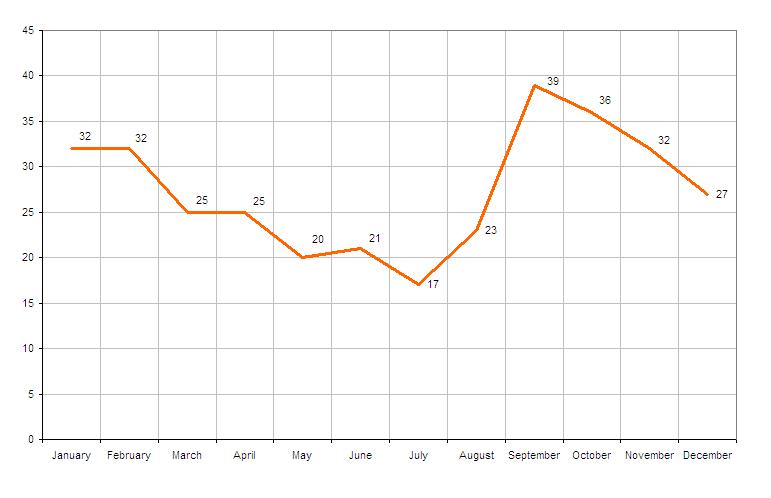
The first sort of data produced the graph below. This show each player’s birth month categorised in a calendar year. For instance, you can see that there are 32 players born in January.

January to December

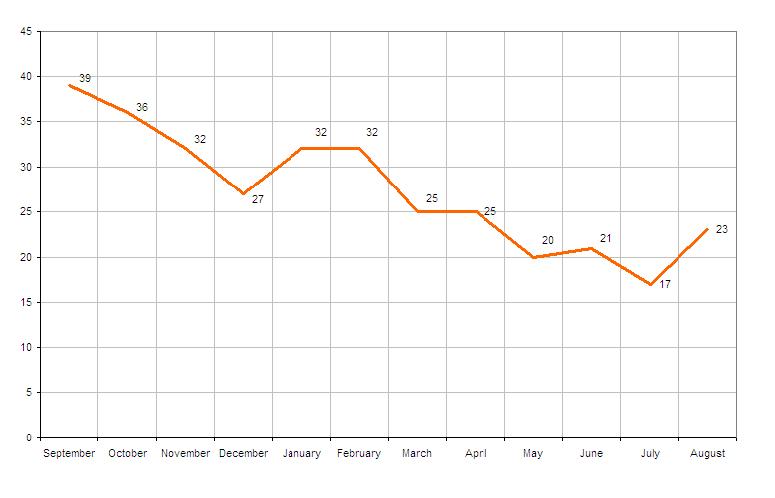
What should be immediately obvious is the spike that occurs in September. In fact the highest month is September at 39 players and the lowest is July with 17. It seems a relatively compelling illustration of the birth month theory. In order to make it more compelling the data has been re-ordered in to the months of the recruitment year, September to August. You can see the outcome below.

September to August

This perfectly sums up the bias towards the recruitment of players in the early months of the recruitment year as you can see the line tail off over the course  of the year.

Maybe tomorrow

This has been done purely because it was of interest to try this with a new set of data, what won’t be done here is to delve any deeper. The books mentioned earlier provide superb material to keep you thinking and are highly recommended. However, it is of interest about how you can get round such bias. The sooner football clubs can get around this then the more likely children will be brought in to game with more game specific talents, such as speed of thought, vision, creativity and less around the physical attributes that are easier to monitor. For a club like Blackpool this may not necessarily need to be a factor as their youth programme produces relatively few first team players, but if the national game is to step up then this is an area that must be overcome with extensive work and improved scouting skills.


*338 players were listed on the site. 9 were removed as they had no date of birth attached, therefore 329 players formed the data used here.